
Transfer Student Resources
Transferring to UC Berkeley in Fall 2026? Here’s Your Off-Campus Housing Timeline
A month-by-month plan to land an apartment near campus before classes start.
If you were just admitted to UC Berkeley as a transfer student for Fall 2026, congratulations. You have about three months to figure out where you’re going to live — and in Berkeley, three months is a real timeline, not a long one. Most transfers who end up in a unit they love treat housing like a project from the day they receive the SIR confirmation.
Here’s a clean, month-by-month plan to follow between now and move-in day.
| May | Decide and prep (Weeks 1–3 after admission) • Decide whether you want on-campus housing or off-campus. If on-campus, submit your housing application by Berkeley’s transfer deadline. • If off-campus, set your budget, target neighborhood (Southside, Northside, Downtown, Elmwood), and roommate plan. • Identify a cosigner and confirm they’re willing — most Berkeley landlords require one. |
| Late May – June | Build your application packet • Assemble photo ID, financial aid award letter, two recent pay stubs (yours or cosigner’s), a free credit report, and two references in a single labeled folder. • Save it as “[Last Name] — Berkeley Rental Application 2026.” • Start a shortlist of 8–10 target buildings from local property managers, Cal Rentals, Zillow, and Berkeley housing Facebook groups. |
| June | Tour and shortlist • Schedule 3–5 in-person or virtual tours per visit. Walking tours work in Berkeley — most rentals near campus are within 15 minutes of each other. • At every tour, ask: lease term, utilities, sublet policy, and “What’s the fastest path to a signed lease if I want this unit?” • Take photos. Save listings to a single spreadsheet with rent, location, and contact. |
| July | Apply and sign • Submit complete applications within hours of touring your top units. Pay any application fee promptly. • Once approved, expect 24–48 hours to sign and pay the security deposit. Verify lease dates, rent, deposit (max two months unfurnished in California), and any concessions are in writing. • Confirm move-in date, key pickup process, and utility setup (PG&E, internet) with the property manager. |
| August | Move in and settle • Set up renters insurance before move-in — most leases require it. • Activate PG&E and internet in your name. Schedule delivery for any furniture you’ll need from day one. • Walk the unit with the property manager on day one and document existing condition with photos. This protects your deposit. |
Three things to remember
- Twelve-month leases are the norm. Plan to pay for summer 2027 or have a sublet plan written into your lease before you sign.
- Speed beats perfection. Berkeley landlords approve fast applicants fast and drop slow ones. A complete application submitted in an hour beats a perfect one submitted in three days.
- Everything in writing. Verbal promises about parking, repairs, or rent concessions don’t count. If it isn’t in the lease, it doesn’t exist.
Need help moving faster?
The Berkeley Group manages student rentals across the neighborhoods closest to campus and works on transfer-student timelines every summer. Browse current TBG listings or reach out — we’ll help you turn this timeline into a signed lease before classes start.
Featured Resources:

Moving to Berkeley? Here’s Exactly What to Pack — and What to Leave Behind
A local’s guide to a light, stress-free move-in at The Berkeley Group. Move-in day: Thursday, August 14, 2026.
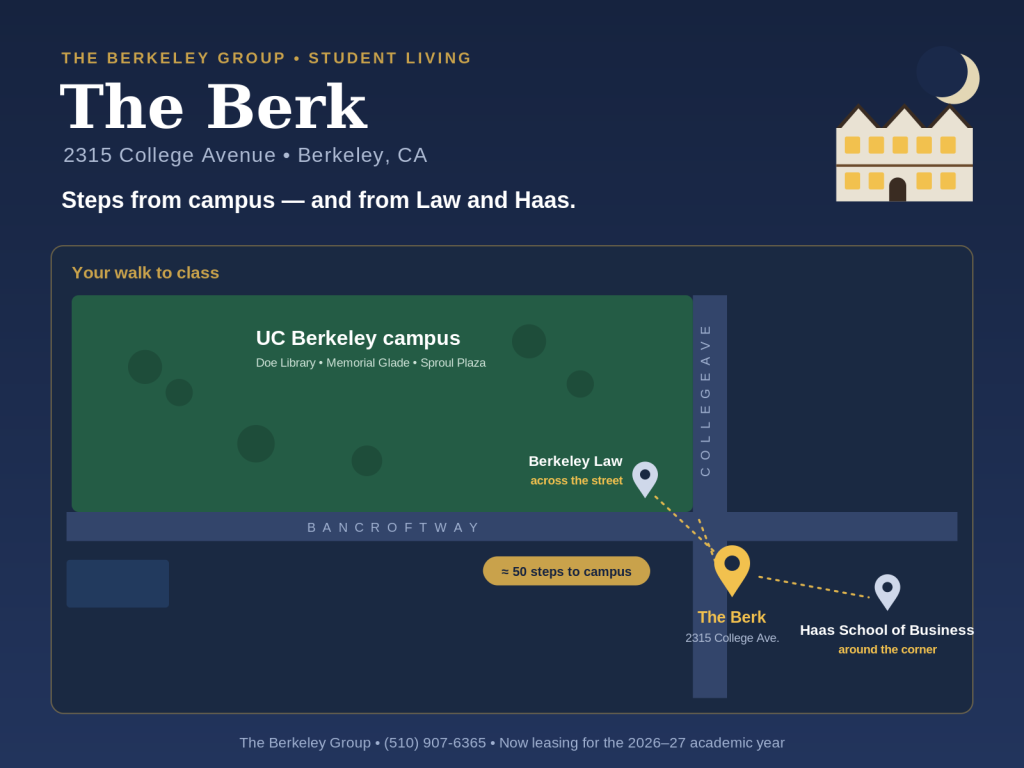
Berkeley Law School & Graduate Student Housing: Why 2315 College Ave. Tops the List
The premier off-campus housing for law, business, and master’s students at UC Berkeley — Steps from your school, fully furnished, and all-inclusive.
How to Sign a Berkeley Lease in 48 Hours: The Transfer Student Edition
A step-by-step, hour-by-hour guide for UC Berkeley transfer students who need to lock down off-campus housing fast. Documents to prep, neighborhoods to target, and the application moves that close deals.
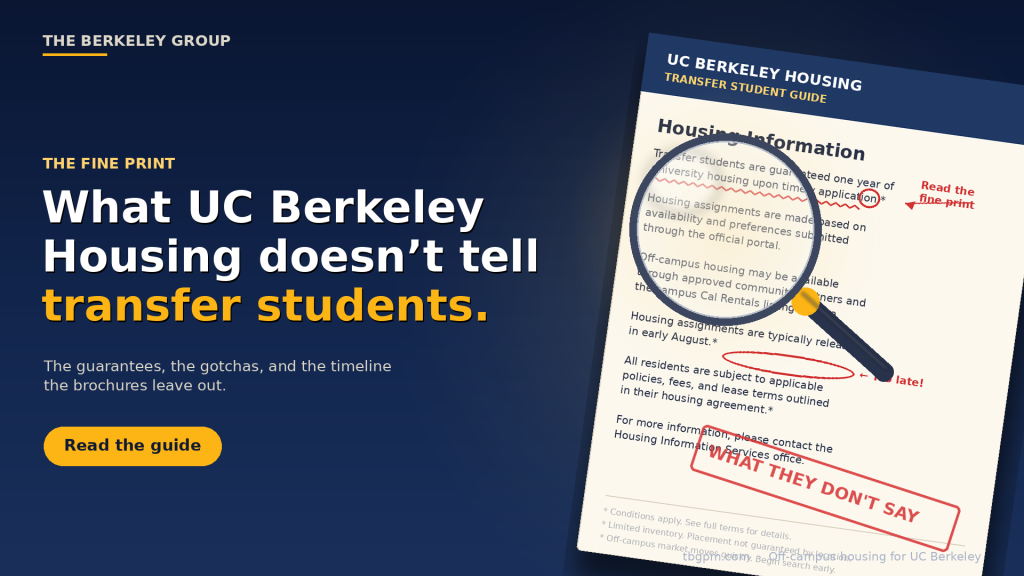
What UC Berkeley Housing Doesn’t Tell Transfer Students
UC Berkeley’s official housing site is a useful starting point, but transfer students consistently tell us the same thing after move-in week: “I wish someone had told me this earlier.” If you’re a transfer headed to Berkeley this fall, here’s what the brochures and FAQ pages tend to leave out.
Parking and Storage Near UC Berkeley: A Transfer Student’s Guide
Here’s a practical guide to handling both — what to expect, what to budget for, and the workarounds that experienced Berkeley students use.